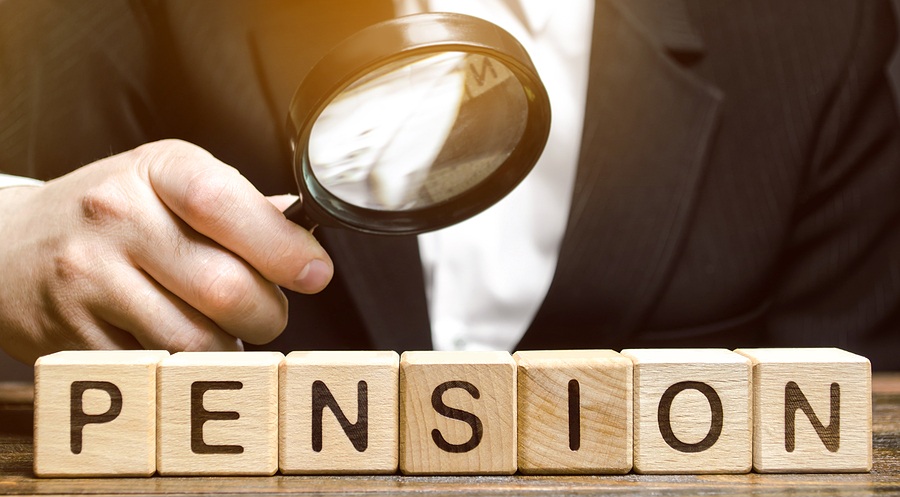
A pension is a type of retirement savings plan in which an employer sets aside funds for employees’ future income in retirement. This income is provided regularly, typically monthly. It’s a form of deferred compensation, meaning the benefits accrue over time, typically based on years of service with the employer.
Traditionally, having a pension helped provide steady retirement income for eligible employees. The employer guarantees a specific payout, typically based on factors such as the employee’s salary and years of service. Pension plan distributions are taxed at the individual’s tax rate because the IRS treats them as pre-tax retirement savings. There are two main types of pensions:
- Defined Benefit plan – This type of pension promises the employee a specific monthly benefit at retirement. The employer manages the investment risk and portfolio strategy.
- Defined Contribution Plan – In this plan type, the employer makes specific contributions to the plan, but the final payout value is not guaranteed. The investment risks are transferred from the employer to the employee.
The Decline of Pensions
Given these types of pension benefits, one might wonder why they don’t have a pension. The truth is, pensions are not as common as they used to be, particularly in the private sector. There are various reasons pension plans are in decline.
- Increased costs – Pensions are expensive for employers. They require a long-term investment and commitment to employees. As life expectancy increases, the cost of providing pensions also goes up.
- Shift to 401(k) plans – Many companies have shifted to offering defined-contribution plans, such as 401(k)s. This requires the employee to set aside funds and make investment decisions. The employer might match a portion of the employee’s contributions, but the employee bears the investment risk.
- Mobility of the workforce – The modern workforce changes jobs more frequently than in the past. Pensions are designed for long-term employees, not for those who switch employers every few years.
- Performance risk – Pensions can be risky for employers. They require significant investment and carry the risk that the funds may not perform as well as needed, potentially leaving employers on the hook for the promised benefits.
- Regulatory changes – Changes in laws and regulations have made it more difficult and expensive for companies to offer pension plans.
Despite these challenges, some employers, particularly in the public sector, still offer pensions. However, for most workers today, a pension is not part of their retirement plan.
Why You May Not Have a Pension
If you’re wondering why you don’t have a pension, the answer boils down to the changing business environment. The shift in retirement plan preferences from pensions to 401(k)s and similar plans is primarily driven by multiple factors.
- Company policies – Depending on the employer’s policies and the company’s size, it may not offer a pension as part of its benefits package.
- Type of employment – Pensions are more common in public-sector jobs such as teaching, law enforcement, and other government positions. They’re less common in the private sector.
- Change in employment culture – As mentioned earlier, the modern workforce is much more mobile. With employees switching jobs more often, long-term benefits like pensions become less applicable.
What Are the Alternatives to a Pension?
Fortunately, there are several other ways to save to prepare for retirement.
- 401(k) Plans – These defined contribution plans are the most common type of retirement plan today. Employees contribute a portion of their wages, often with an employer match, into an investment account. The employee then chooses how to invest these funds.
- Individual Retirement Accounts (IRAs) – IRAs are typically set up by individuals rather than employers. There are several types of IRAs, including Traditional and Roth IRAs, each offering different tax advantages.
- Annuities – Annuities are contracts with an insurance company in which the individual pays a lump sum or a series of payments in exchange for regular disbursements, beginning either immediately or at some future date.
Each of these pension alternatives has its advantages and disadvantages, and what is appropriate depends on individual circumstances. It’s also worth noting that these options are not mutually exclusive and may be combined.
Start Planning Now
Remember, it’s never too early to start planning for retirement. Whether you have a pension or not, understanding the options, educating yourself, and working with a financial professional may help you gain clarity and build a strategy aligned with your long-term goals.
SWG5895640-026 This information is provided as general information and is not intended to be specific financial guidance. Before you make any decisions regarding your personal financial situation, you should consult a financial or tax professional to discuss your individual circumstances and objectives. The source(s) used to prepare this material is/are believed to be true, accurate, and reliable, but is/are not guaranteed.
[PFS_FOOTER]